

Oven Will Not Heat
Display on, cavity cold. Igniters on gas, bake elements on electric; the full story in the not heating section.
An oven that will not heat tends to announce itself at the worst possible moment, usually with dinner already in it. This page covers the whole cooking appliance: oven cavities that run cold or wild, burners that will not light, and controls that lie about temperature, on gas and electric models across Burleson.
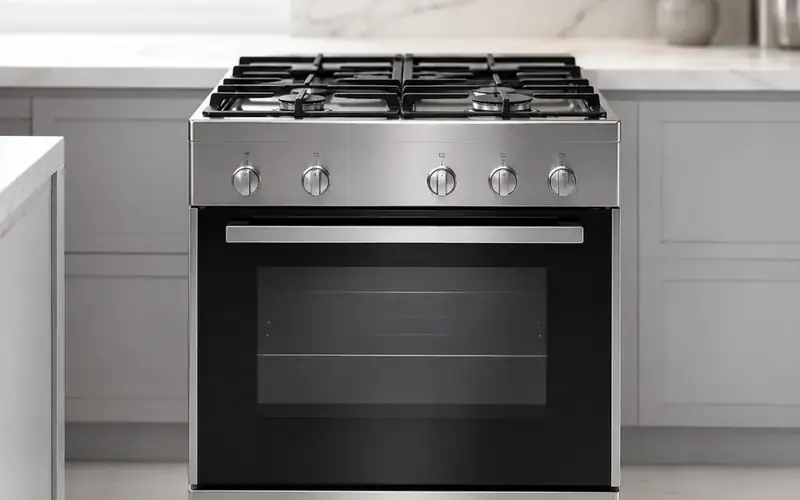
Call (619) 826-9631 for oven, range and stove repair anywhere in Burleson, TX. Ovens that will not heat, temperatures that wander, broilers that quit and burners that will not light are diagnosed in the home across ZIP codes 76028 and 76097, on gas and electric models. One page and one service cover the oven and the range top together; a separate built-in cooktop has its own cooktop repair page.
The most common oven fault in Burleson is also the most misdiagnosed by owners: a gas oven whose igniter glows orange but has grown too weak to open the gas valve. It looks alive and cooks nothing. The heating section below explains it.
Note whether the fault is in the oven cavity, the burners up top, or the controls; each lives in a different part of the appliance.
Display on, cavity cold. Igniters on gas, bake elements on electric; the full story in the not heating section.
Everything underdone or burnt at the set temperature. Sensors and calibration; see the temperature section.
Bake works, broil does not, or the reverse. Each direction has its own element or burner and its own short fault list.
Clicking without flame on gas tops, or an electric burner that heats only on the highest setting. Ignition and switch faults.
Self-clean locks that never release, sagging doors that leak heat, and latches bent by being forced. Never pry a locked door.
F-codes reporting temperature or sensor faults, flickering clocks, and controls that reset themselves mid-bake.
Gas ovens first, because they fool the most people. The bake burner lights from a glow-bar igniter: an element that heats bright orange and, as it heats, draws electric current. The gas valve watches that current and only opens when the igniter draws enough, proof it is hot enough to light the gas safely. Igniters age. A weak one still glows, sometimes for minutes, but never reaches the current the valve demands, so the oven stays cold with every appearance of trying. Owners understandably suspect the thermostat or the gas supply; nine times out of ten it is a tired igniter, a modest part doing a safety-critical job.
A gas oven that heats slowly, overshoots, or smells of gas before it lights is showing the same wear earlier in its life: the igniter takes too long to prove itself, gas waits, and ignition comes late and rough. That pattern is worth reporting word for word on the call, because it separates the igniter from the rarer valve and control faults.
Electric ovens are more visual. The bake element along the oven floor does most of the work, with the broil element at the top assisting preheat on many models. A bake element that has failed often shows it: blistering, a hole burned through, or a section that stays dark while the rest glows. Hidden bake elements, under the oven floor on newer designs, fail invisibly and get found by testing instead. If neither element heats but the display lives, suspicion moves to the thermal fuse, the relay on the control board, or the wiring between them.
Safety lines worth stating plainly: never run a gas oven that smells strongly of unburned gas, and never use the oven to heat the house. For the diagnosis itself, call (619) 826-9631 with the fuel type and whether the top burners work; on a gas range, working burners with a cold oven point squarely at the bake igniter, while everything dead at once points at supply or control.
Every oven cycles around its set point, so a few degrees of swing is the design, not a fault. The fault is a consistent lie or a wild ride: biscuits that need eight extra minutes every time, roasts that scorch at temperatures the recipe trusts, or an oven that overshoots, cools too far, and overshoots again. The part at the centre is the temperature sensor, a thin probe on the oven’s rear wall whose resistance changes with heat. As sensors age, their readings drift, and the control happily holds the oven at the wrong temperature because it believes the probe.
Testing is refreshingly low-tech: an oven thermometer, a preheat, and patience. Read the thermometer after the oven settles and again twenty minutes later. A steady offset, the oven holding 25 degrees cold on every check, can often be calibrated out through the control’s adjustment, or confirms a drifting sensor. Readings that wander, or a display temperature that jumps around standing still, point at the sensor failing outright or its wiring, and at the control beyond that.
Two habits imitate sensor faults and are worth ruling out free of charge. Foil lining the oven floor or a rack blocks the airflow the oven’s temperature pattern depends on, and a door that does not seal, from a hardened gasket or hinges sprung by a heavy turkey and an open door used as a step, leaks heat the control then chases. Check both before concluding the electronics are at fault.
When the thermometer shows a genuine swing or offset that calibration cannot cure, the sensor is a straightforward replacement and one of the best-value repairs in the kitchen. Call (619) 826-9631 and share your thermometer readings if you took them; a repair visit that starts with known offsets ends faster. The same visit can check the cooktop side if burners are misbehaving too.
The range is tested in place: oven cavity, burners and controls each get their turn under power, with temperature verified by instrument rather than by the display alone.
Bake and broil are run separately, igniter draw or element glow observed, and the cavity temperature is measured against the set point through a full cycle.
Sensor resistance is metered against temperature, igniters are checked for current draw, elements for continuity, and codes read from the control where stored.
After the fix, the oven preheats and holds while an independent thermometer confirms the temperature matches the dial, so dinner itself is not the test.
Freestanding ranges anchor most Burleson kitchens, gas in the older Old Town homes and plenty of the rental stock, electric smooth-tops across the newer subdivisions, plus slide-in and front-control models, double-oven ranges for the holiday cooks of Hidden Creek and Mountain Valley, and built-in wall ovens single and double. Brands covered include GE, Whirlpool, Samsung, LG, KitchenAid, Maytag, Frigidaire, Bosch and Electrolux. The model number is on the frame behind the oven door or on a leg behind the storage drawer.
Igniters, elements and sensors are among the most worthwhile repairs in the house, restoring a range for the cost of a part rather than an appliance. The balance shifts on older ranges when the electronic control fails and is no longer made, when a glass top cracks alongside other faults, or when several systems go at once. Expect the same straight assessment as the repair or replace guide, and note the published cost factors if you are weighing the decision.
Oven calls in Burleson follow the calendar: a surge before Thanksgiving and Christmas when a weak igniter finally meets a turkey, another around back-to-school when weeknight cooking resumes in earnest. Holiday timing is why a slow-heating oven in October deserves a call before it becomes a cold oven in late November with family driving in from across the metroplex.
From gas ranges in the older streets near Renfro to double wall ovens in Mountain Valley and the builder-grade electric ranges of Prairie Timbers, every kitchen in 76028 and 76097 is covered by the same number.
See the full service area →The rest of the cooking and kitchen line-up:
Cooktop repair in BurlesonOn a gas oven, the bake igniter is the first suspect: it weakens until it can no longer draw enough current to open the gas valve, so the oven sits cold while the burners on top work fine. On an electric oven, it is usually the bake element itself, which often shows blistering or a visible break. Thermal fuses and the control board complete the list. Call (619) 826-9631 and say gas or electric.
The temperature sensor drifts with age and starts lying to the control, so the oven settles hot or cold of the dial. Test with an inexpensive oven thermometer over a full preheat and twenty minutes of holding: an offset that is consistent can sometimes be calibrated out, while swings and wandering readings point at the sensor or control. Wild swings between too hot and too cold are never just calibration.
On electric ovens a failing bake element may heat only along part of its length, and a convection fan that has stopped leaves hot and cold zones. On gas ovens, a weak igniter can make the burner cycle strangely. Lining the oven floor or racks with foil also blocks airflow and causes this, so check that first; it costs nothing to rule out.
Do not force it. The lock releases when the oven cools fully, which can take an hour or more after a self-clean cycle. If it stays locked cold, the lock motor or its switches have likely failed, sometimes helped along by the extreme heat of the cycle itself. This is a known self-clean side effect; call (619) 826-9631 rather than prying at the door and bending the latch.
The exact meanings vary by brand, but the F-code family on ranges most often reports temperature problems: F2 commonly means the oven ran too hot, F3 or F4 a failed temperature sensor circuit, and F10 on Frigidaire models a runaway temperature. Write the code down exactly as shown and mention it when you call; it usually confirms which test comes first.
Yes. Oven repair in Burleson covers freestanding gas and electric ranges, slide-in models, double ovens and built-in wall ovens from GE, Whirlpool, Samsung, LG, KitchenAid, Maytag, Frigidaire, Bosch and Electrolux. Separate cooktops have their own service page. Have the model number from the door frame ready when you call (619) 826-9631.
Call now, say gas or electric and what the oven does, and get the repair planned before the next meal depends on it.
Call (619) 826-9631